
Staffing Agency Sale Closing Process: The Strategic Guide to Finalizing Your Deal
The wire transfer isn't just a final step; it's the result of a meticulously guarded transition where your hard-earned value is either preserved or quietly eroded. You've spent years building your firm, and after months of negotiations, it's natural to feel a sense of deal fatigue as you approach the finish line. We understand that the staffing agency sale closing process can feel like an endless marathon of final due diligence and complex working capital adjustments. It's common to feel a flicker of anxiety about potential re-trading or late-stage price adjustments, especially when you're so close to the goal.
You deserve a transition that feels like a shared victory rather than a high-pressure hurdle. This guide provides a clear roadmap to help you maintain momentum and secure your legacy. We'll walk you through everything from managing the current 60 to 90-day due diligence timelines to ensuring a strategic fit for your existing team. By the end of this article, you'll have the tools to navigate legal risks, understand post-closing liabilities, and finalize your deal with total confidence.
Key Takeaways
- Learn how to manage the typical 60-to-90-day timeline to keep your transition on schedule and maintain momentum.
- Discover how to protect your valuation during the final due diligence phase by maintaining "Clean and Clear" financial records.
- Master the staffing agency sale closing process by effectively handling sensitive VMS contract transfers and recruiter retention strategies.
- Gain a clear roadmap for closing day logistics, from the final digital sign-off to the successful wire transfer of funds.
- Understand how specialized M&A advisory protects your interests and helps you avoid common post-closing liabilities.
Understanding the Staffing Agency Sale Closing Phase
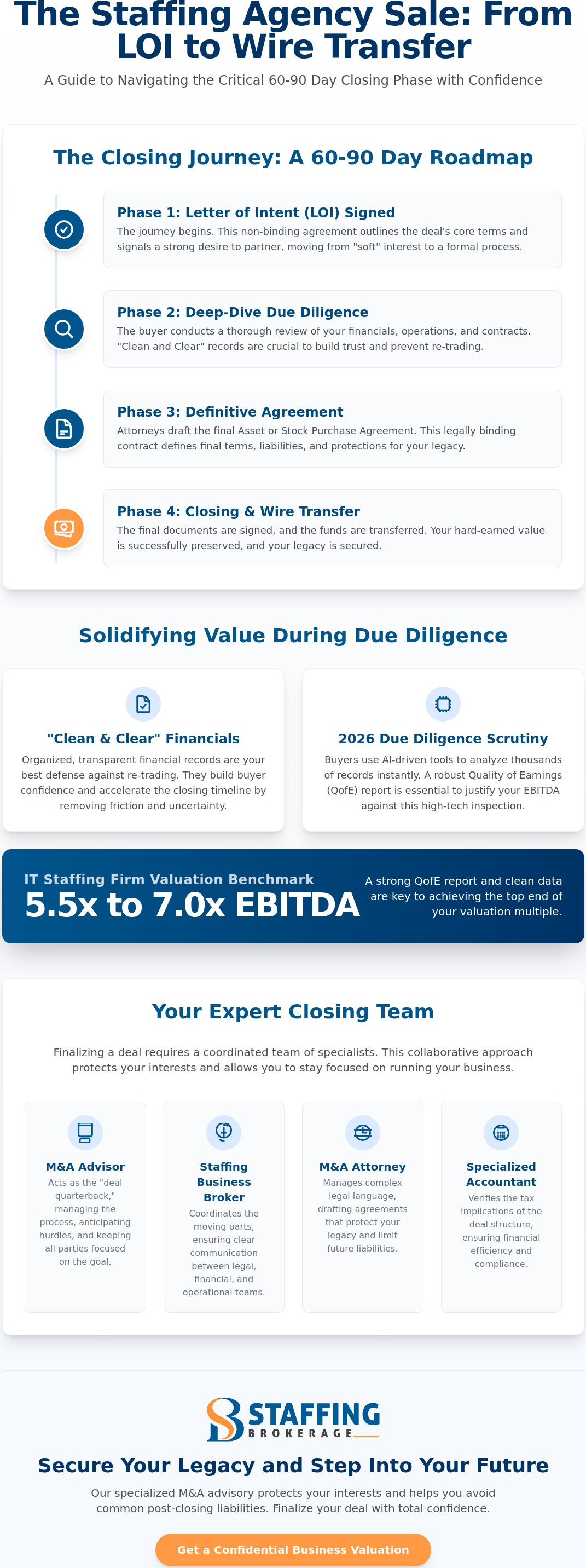
The staffing agency sale closing process is often the most intense period of any transaction. It represents the critical bridge between a handshake agreement and the actual wire transfer. While the Letter of Intent (LOI) signals a strong desire to partner, the closing phase is where that intent transforms into a binding legal reality. In the current 2026 market, this phase typically spans 60 to 90 days. This timeline allows for the deep scrutiny required in modern Mergers and acquisitions (M&A), ensuring every operational detail aligns with the initial valuation.
It's also the period of highest risk. Deal fatigue can set in as the initial excitement of the offer fades into the repetitive nature of document requests. Small misunderstandings can escalate into deal-breaking conflicts if they aren't handled with care. This is why a specialized M&A advisor acts as your "deal quarterback." We anticipate hurdles before they arrive, keeping all parties focused on the long-term value rather than short-term friction. Our goal is to maintain a steady pace so you don't feel overwhelmed by the technical demands of the transition.
The Bridge from LOI to Definitive Agreement
The LOI is a roadmap, but the Definitive Purchase Agreement is the destination. During this transition, the buyer moves from "soft" interest to "hard" legal commitments. You'll move beyond general terms to specific indemnifications, representations, and escrow arrangements. It's vital to keep your business running at peak performance during this "tunnel" period. Any dip in revenue or loss of a major client can trigger a "re-trade," where the buyer attempts to lower the price based on recent performance. We help you maintain business momentum by managing the information flow, allowing you to stay focused on your team and your clients.
Key Stakeholders in the Closing Room
Finalizing a deal requires a team of specialists working in concert. Your M&A attorney manages the complex legal language while specialized accountants verify the tax implications of the deal structure. A staffing business broker coordinates these moving parts, ensuring communication doesn't stall between the different offices. By letting these experts handle the technicalities, you stay free to lead your operations. This collaborative approach builds trust with the buyer and ensures that the final documents reflect the true spirit of the partnership you've built together.
The Final Hurdles: Due Diligence and Legal Documentation
The deep-dive phase is where the deal's value is either solidified or questioned. During the staffing agency sale closing process, the transition from a signed Letter of Intent to a final contract requires total transparency. Buyers aren't just looking at your bottom line; they're looking for the story behind the numbers. If your financial records are "Clean and Clear," you remove the friction that often leads to delays or price adjustments. Providing organized data early builds the trust necessary to move toward a successful wire transfer.
Drafting the Asset Purchase Agreement (APA) or Stock Purchase Agreement (SPA) is the most technical part of the journey. This is where the legal documentation in M&A transactions defines your future liabilities and protections. We work closely with your legal team to ensure these documents protect your legacy while meeting the buyer's requirements. Open communication here is the best defense against "re-trading," which is when a buyer tries to lower the price late in the game due to perceived risks. By addressing potential issues head-on, you maintain the upper hand in negotiations.
Staffing Financial Due Diligence in 2026
The landscape of due diligence has evolved rapidly. In 2026, buyers increasingly rely on AI-driven audit tools to analyze thousands of placement records and payroll cycles in minutes. These tools can spot inconsistencies that manual reviews might miss. To stand up to this scrutiny, a robust Quality of Earnings (QofE) report is essential. It justifies your EBITDA and ensures that your revenue multiples align with current benchmarks, such as the 5.5x to 7.0x multiples currently seen for high-growth IT staffing firms. If you want to ensure your firm is ready for this level of inspection, our team can provide a comprehensive business valuation and assessment.
Finalizing the Staffing Company Deal Structure
The final negotiation often centers on how you'll receive your money. Finalizing the staffing company deal structure requires a balance between immediate liquidity and future upside. Most transactions in today's market involve 60% to 80% cash at closing, with the remainder tied to performance-based earn-outs or seller notes. We help you define specific, achievable milestones for these deferred payments. This clarity reduces anxiety and ensures that both parties stay aligned on the firm's growth trajectory post-sale. Understanding the tax implications of these structures early on helps prevent surprises when the funds finally arrive.
Staffing-Specific Closing Challenges and Solutions
Navigating the staffing agency sale closing process requires more than just financial reconciliation; it demands a deep understanding of the relationships that power your firm. Unlike general business transactions, a staffing firm's value is tied directly to its contracts and its recruiters. If these aren't handled with care during the final 30 days, you risk losing the very assets the buyer is paying for. We focus on a "steady hand" approach to ensure these delicate transitions strengthen the deal rather than complicate it.
Operational compliance is another area where staffing deals can face friction. You'll need to address worker's compensation tail coverage and ensure that all insurance policies align with the buyer's requirements. This specialized focus ensures the staffing agency sale closing process doesn't stall due to administrative oversights or insurance gaps. By proactively managing these staffing-specific hurdles, you protect your legacy and provide the buyer with a turn-key operation from day one.
Client Contract Assignment and Consents
The transfer of client relationships is often the most complex part of the closing phase. Many major staffing agreements, particularly those involving Vendor Management Systems (VMS) or Managed Service Providers (MSP), contain "Change of Control" clauses. These provisions may require written consent from the client before the contract can be legally assigned to the new owner. We help you identify which contracts need immediate attention and develop a strategy for notifying clients. The goal is to frame the sale as a positive evolution that provides even better service, ensuring that no major revenue streams are disrupted during the transition.
Protecting Your Intellectual Capital: The Recruiting Team
Your internal team is the engine of your agency. Top-producing recruiters often feel a sense of uncertainty when they hear about a pending sale, making retention a top priority. To maintain stability, many successful transactions utilize stay-bonuses that reward key employees for remaining with the firm through the first six to twelve months of new ownership. It's also vital to have updated non-compete and non-solicitation agreements in place for your high-value producers. We guide you on the optimal timing for communicating the sale to your staff, ensuring the message is delivered with transparency and optimism to foster long-term loyalty.
Finally, ensuring a strategic fit for your internal leadership is essential for a smooth post-closing period. If your managers feel aligned with the buyer's vision, they'll become your strongest advocates during the transition. This alignment reduces friction and helps the buyer feel confident in the team's ability to execute the growth plan you've collectively designed.
The Day of Closing and Immediate Post-Closing Transition
The final day of the staffing agency sale closing process is a moment of profound transformation. It's the point where your years of dedication translate into tangible financial security. In our modern, digital-first environment, the "closing table" has moved to secure online deal rooms, but the precision required remains just as high. We ensure that every detail is in place so that the transition feels effortless and professional, allowing you to focus on the significance of the achievement.
The mechanics of the wire transfer are the heartbeat of closing day. Once all conditions are met, the buyer initiates the flow of funds according to the final settlement statement. This often involves releasing funds from escrow accounts and ensuring that all third-party liens on receivables or assets are formally cleared. It's a methodical process that requires coordination between banks, attorneys, and your advisory team. We stay by your side until the confirmation of the wire arrives, marking the official completion of the transaction.
One critical task that often follows the wire transfer is the working capital "True-Up." This process finalizes the exact amount of cash, receivables, and payables left in the business at the moment of the switch. Because staffing firms deal with high-volume weekly payroll, this calculation requires surgical precision. We guide you through this final adjustment to ensure the final payout is accurate and fair, preventing any post-closing disputes over fluctuating accounts receivable.
Closing Day Checklist: The Final 24 Hours
The final hours before closing are about verification and readiness. To ensure a smooth handoff, we follow a strict protocol:
- Signature Verification: Ensure all necessary parties have uploaded final, executed signature pages to the secure deal room.
- Lien Releases: Confirm that any UCC filings or liens against your staffing assets or receivables have been officially released by your lenders.
- Settlement Execution: Review the final flow of funds to confirm that payroll, taxes, and advisor fees are accurately accounted for in the wire instructions.
The First 90 Days Post-Closing
Your role doesn't end the moment the money hits your account. A successful staffing agency exit strategy includes a thoughtful 90-day transition plan. During this time, you'll help the buyer navigate the nuances of your back-office systems and payroll cycles. Most importantly, you'll act as a bridge for your team, helping the buyer understand the unique recruiting culture that made your firm successful. This period is about stewardship, ensuring that the partnership you've built continues to thrive under new leadership.
If you're ready to start planning your own successful transition, our team is here to provide expert staffing company sell-side representation to guide you through every step.
Choosing the right partner is the difference between a deal that crosses the finish line and one that collapses under its own weight. During the final stages of the staffing agency sale closing process, a generalist broker might understand a standard balance sheet, but they often lack the deep industry insight required to defend a staffing firm's specific revenue drivers. We bring a national perspective to the table, allowing us to anticipate buyer behavior and negotiate terms that reflect the true worth of your recruiting engine.
Our role is to act as your advocate and strategist. We protect your valuation during those high-stakes final negotiations where buyers might look for reasons to adjust the purchase price. By providing a steady hand and clear data, we ensure that the staffing agency sale closing process remains a collaborative journey rather than a series of confrontations. We understand that this isn't just a business transaction; it's the culmination of your life's work, and we treat it with the integrity it deserves.
Navigating Complexity with a Steady Hand
Deal fatigue is one of the greatest threats to a successful exit. As the weeks of due diligence stretch on, it's easy for owners to feel overwhelmed by the constant stream of requests. We manage this information flow to prevent burnout and keep both parties moving toward the wire transfer. Part of this involves the expertise of an M&A advisor staffing industry specialist who knows how to vet buyers effectively. We ensure you're only negotiating with serious partners who have the capital and the cultural alignment to respect your legacy. Our commitment to honest practice means we'll always give you the straight facts, even when the conversations get difficult.
Your Next Chapter Starts Here
Selling your firm is about more than just the numbers on a settlement statement; it's about the freedom to pursue what comes next. Whether you're planning a well-earned retirement or looking for your next entrepreneurial challenge, we're here to help you transition with confidence. Our supportive partnership doesn't end when the wire transfer is confirmed. We stay involved to ensure the post-closing transition is smooth for you and your team, helping you navigate the first 90 days of your new reality. We believe that a successful exit is defined by your personal satisfaction as much as the financial outcome. Contact Staffing Brokerage today to discuss your exit goals.
Secure Your Legacy and Step Into Your Future
Finalizing your deal is about more than just signing papers; it's about ensuring the agency you've built continues to thrive under new stewardship. By mastering the staffing agency sale closing process, you protect your valuation and ensure a seamless handoff for your internal team. Throughout this guide, we've explored how to manage technical hurdles like AI-driven due diligence and the delicate transfer of VMS contracts. These steps are the final milestones in a journey that deserves a rewarding and professional finish.
Success in these final stages requires a partner who understands the nuances of the recruiting world. At Staffing Brokerage, we offer specialized staffing M&A expertise and access to a vast national buyer network. Our proven strategic fit methodology ensures your firm finds a buyer who respects your culture while meeting your financial goals. You've put in the years of hard work; now it's time to secure the legacy you deserve and begin your next chapter with total peace of mind.
Ready to start your strategic exit? Consult with Staffing Brokerage today.
We look forward to helping you navigate this transition with the clarity and confidence you've earned.
Frequently Asked Questions
How long does the staffing agency sale closing process usually take?
The staffing agency sale closing process typically takes between 60 and 90 days from the moment a Letter of Intent is signed. This timeframe allows for thorough due diligence, legal documentation, and final regulatory checks. While some smaller deals might move faster, this 2026 industry benchmark ensures all parties have enough time to verify financials and operational details without rushing the transition. Maintaining a steady pace helps prevent deal fatigue during these final months.
What is a working capital adjustment in a staffing company sale?
A working capital adjustment is a "true-up" calculation that ensures the buyer receives a business with a normalized level of operating liquidity. In a staffing context, this involves calculating the exact value of accounts receivable and payroll liabilities at the moment of closing. If the final balance is higher or lower than the agreed-upon target, the purchase price is adjusted accordingly. This process keeps the transaction fair and ensures the business has the fuel it needs to operate on day one.
Do I have to tell my employees I am selling before the deal closes?
You aren't legally required to notify employees before the deal closes, and many owners wait until the final 24 to 48 hours to share the news. Keeping the sale confidential helps maintain business stability and prevents premature turnover. We typically recommend a strategic communication plan that introduces the new owner immediately after the wire transfer. This approach frames the change as a positive opportunity for growth and continued support for the internal team.
What happens to my client contracts when I sell my staffing agency?
Most client contracts will transfer to the new owner, but the method depends on the deal structure and specific "Change of Control" clauses. In an asset sale, you'll often need written consent from clients to assign the contracts to the buyer. We help you review your major agreements early in the staffing agency sale closing process to identify which VMS or MSP partnerships require formal notification. This proactive step ensures revenue continuity and protects the buyer's investment.
What are the most common reasons a staffing deal fails at the closing stage?
Deals most often fail at the closing stage due to "re-trading" after negative findings in due diligence or significant revenue dips. If a major client leaves or if financial records don't match the initial claims, a buyer may lose confidence and withdraw. Other common hurdles include disagreements over working capital targets or the failure to secure key recruiter retention agreements. Maintaining total transparency from the start is the best way to prevent these late-stage collapses.
Can a buyer change the price after the Letter of Intent is signed?
Yes, a buyer can propose a price change if due diligence reveals risks or liabilities that weren't disclosed during initial negotiations. This is often called "re-trading." While the LOI sets a target price, it's usually non-binding regarding the final valuation. We work to protect your interests by ensuring your data is accurate and well-presented from the beginning. This makes it much harder for a buyer to justify lowering their offer during the final stages.
What is an earn-out and how does it work in the staffing industry?
An earn-out is a portion of the purchase price that's paid after the closing based on the firm's future performance. In the staffing industry, these are often tied to specific EBITDA targets or the retention of key client accounts over 12 to 24 months. It's a collaborative way to bridge valuation gaps, allowing you to earn a higher total price if the business continues to grow. This structure aligns your interests with the buyer's long-term success.
What is the role of an escrow agent in the closing process?
An escrow agent acts as a neutral third party that holds funds or documents until all conditions of the purchase agreement are met. They ensure the buyer's money is ready and that the seller's signature pages are in place before the final release. This role is vital for building trust, as it guarantees that the wire transfer only occurs once every legal and operational requirement has been verified. It provides a secure environment for both parties to finalize the deal.