
Staffing Agency Post-Acquisition Integration: A Strategic How-To Guide for 2026
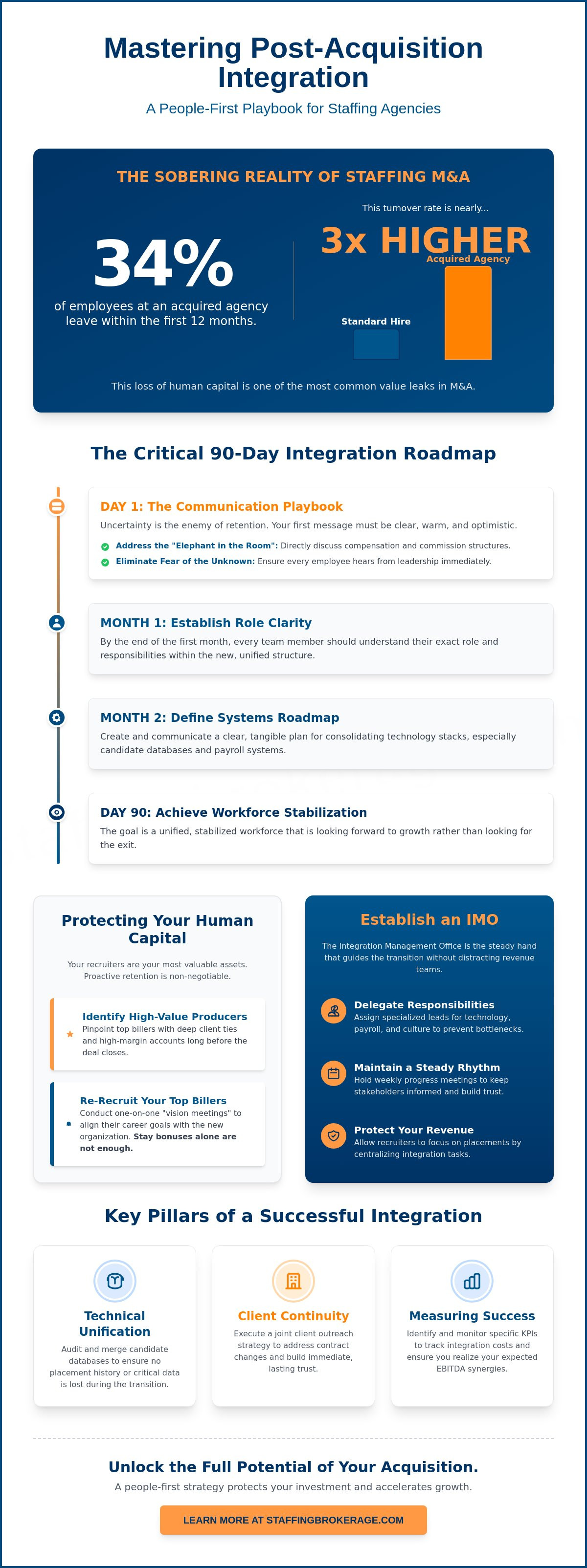
Nearly 34% of employees at an acquired staffing agency leave within the first twelve months, a turnover rate almost triple that of a standard hire. It's a sobering reality for any buyer. You've invested significant capital into a deal, yet the human capital that drives your revenue often feels the most vulnerable during a transition. Successfully managing a staffing agency post-acquisition integration requires more than just merging spreadsheets; it requires a steady hand to guide your new team through the uncertainty.
We understand that you're balancing technical friction in candidate databases with the urgent need to prevent client attrition. This guide will show you how to master the integration process with a people-first strategy that protects your investment and accelerates growth. We'll walk through the tactical steps to unify your systems, comply with 2026 regulatory shifts like Delaware's new paid leave, and realize the full EBITDA potential of your new partnership.
Key Takeaways
- Learn how to establish an Integration Management Office (IMO) to oversee the transition without distracting your revenue-generating teams.
- Discover a people-first framework for staffing agency post-acquisition integration that identifies and secures your most productive recruiters.
- Understand the technical requirements for auditing and merging candidate databases to ensure no placement history is lost during the move.
- Protect your book of business by executing a joint client outreach strategy that addresses contract changes and builds immediate trust.
- Identify the specific KPIs needed to monitor integration costs and ensure you are realizing your expected EBITDA synergies.
The Critical First 90 Days: Setting the Pace for Staffing Integration
Successful staffing agency post-acquisition integration is more than a legal formality; it's the strategic process of unifying two distinct entities into a single, high-performing organization. This post-merger integration process involves aligning cultures, systems, and people to protect the underlying value of your investment. The first 90 days are critical. This period sets the tone for the entire partnership. If you move too slowly, you risk losing momentum. If you move too fast without a plan, you risk alienating your most valuable recruiters.
Establishing the Integration Management Office (IMO)
To keep your sales and recruiting teams focused on their desks, you need a dedicated team to manage the transition. We recommend selecting leaders from both the acquiring and acquired firms to foster a sense of mutual respect and partnership. This group, the IMO, acts as the steady hand during the transition. They ensure that the complex work of merging two businesses doesn't derail daily operations.
- Delegate specialized responsibilities: Assign specific leads for technology, payroll, and culture to specialized sub-teams. This prevents bottlenecks and ensures experts are handling the most sensitive data.
- Maintain a steady rhythm: Hold weekly progress meetings to ensure all stakeholders feel informed. This methodical approach builds trust and prevents the feeling of being overwhelmed.
- Protect your revenue: By centralizing integration tasks, you allow your recruiters to keep making placements without administrative distractions.
The Day 1 Communication Playbook
Uncertainty is the enemy of retention. On day one, your message should be clear, warm, and optimistic. Your internal employees and field staff need to hear from leadership immediately to eliminate the "fear of the unknown." This isn't just about a change in ownership; it's the beginning of a collaborative journey.
Address the elephant in the room right away. Every recruiter is asking the same thing: "What happens to my compensation and commission structure?" Be direct. If things are staying the same, say so clearly. If there are changes planned, explain the timeline and the reasoning behind them. Using transparent language builds the trust necessary for long-term alignment. Stability is your goal here. You want your new team to feel that their professional milestones are just as important to you as the deal itself.
Set clear, measurable milestones for the first three months to maintain buyer confidence. By the end of month one, every employee should understand their role in the new structure. By month two, you should have a clear roadmap for system consolidation. By day 90, the goal is a stabilized workforce that is looking forward to growth rather than looking for the exit. Setting these expectations early ensures that your staffing agency post-acquisition integration remains on track, transforming a complex transaction into a shared accomplishment.
Protecting Your Human Capital: Recruiter Retention and Culture Alignment
In the staffing industry, your primary assets don't sit on a balance sheet; they walk out the door at the end of every business day. The success of your staffing agency post-acquisition integration depends almost entirely on your ability to retain the recruiters who hold the keys to client relationships and candidate pools. As we noted previously, turnover rates for acquired employees can spike as high as 34% in the first year. This loss of talent is one of the most common value leaks in staffing M&A, often occurring because the transition feels like a disruption rather than an opportunity.
To protect your investment, you must identify "High-Value Producers" long before the ink is dry. These are the billers who consistently exceed quotas and maintain deep ties with high-margin clients. While "Stay Bonuses" can provide a short-term buffer, they're rarely enough to ensure long-term loyalty. Top-tier recruiters need to see a clear path for future career growth and a vision that aligns with their personal professional milestones. If they feel like a small cog in a large machine, they'll likely look for a firm that offers more personalized attention.
Re-Recruiting Your Top Billers
The first 90 days should include one-on-one "vision meetings" with your key producers. These aren't performance reviews; they're collaborative sessions designed to align their goals with the new organization. During these meetings, highlight the expanded resources available to them. This might include better technology, a larger national footprint, or the specialized support that comes from a firm utilizing staffing company buy-side advisory services to scale operations. When you frame the merger as a way to help them bill more with less friction, you transform from a "buyer" into a "partner."
Bridging the Cultural Divide
Friction often arises when two different recruitment philosophies collide. One firm might prioritize a "High-Touch" approach rooted in deep networking, while the other relies on a "High-Tech" model driven by AI and automation. Effective staffing agency post-acquisition integration requires mapping these cultural DNAs to find common ground. Avoid a "conqueror" mentality where the buyer's way is the only way. Instead, create a unified mission statement that incorporates the strengths of both original brands.
Standardizing commission structures is perhaps the most sensitive part of this process. Top billers are protective of their earning potential. If you must adjust structures, do so with a steady hand and transparent communication. Ensure the new plan offers comparable or better upside for high performance. If you're feeling uncertain about how to balance these complex human elements, consulting with a professional advisory team can help you navigate the nuances of culture mapping and retention planning with confidence.
Operational Integration: Merging Databases and Staffing Technology
Merging two staffing firms often feels like a puzzle where the pieces don't quite fit. While people are the heart of the business, your technology stack is the engine that allows them to work efficiently. A successful staffing agency post-acquisition integration relies on a seamless transition of candidate data and placement history. Without a clear roadmap, you risk losing years of proprietary recruiting intelligence and damaging the very database you just purchased.
Audit both firms’ Applicant Tracking Systems (ATS) and CRM platforms immediately. You aren't just looking for features; you're assessing data compatibility. Consolidating these systems allows you to realize operational synergies quickly, reducing software licensing costs and streamlining back-office functions like payroll and invoicing. We recommend having all staff trained and fully transitioned to the unified technology stack within the first 60 days to maintain momentum.
The ATS and CRM Migration Roadmap
Decide on a single "Source of Truth" platform. Maintaining two databases for too long creates "data silos" where recruiters can't see each other's candidates, leading to missed placements and internal friction. Before the migration begins, cleanse the data. Remove duplicate entries and verify outdated contact information. This ensures your new, combined database is a high-value asset rather than a cluttered mess.
Your migration strategy should be informed by your initial findings. The due diligence buying staffing agency phase should have already flagged any major technical discrepancies or security risks. Use that data to prioritize which records move first and how to map custom fields from one system to another. A steady, methodical approach here prevents the loss of crucial placement history that defines the firm's value.
Unifying VMS and MSP Portals
For firms specializing in high-volume or enterprise accounts, Vendor Management Systems (VMS) are vital. Review all active VMS contracts for "change-of-control" clauses. These provisions can sometimes trigger a need for contract renegotiation or even termination if not handled with care. It's a technical detail that requires a strategic perspective.
Notify your Managed Service Providers (MSPs) of the acquisition early. This ensures uninterrupted portal access for your recruiters so they don't miss out on new job orders during the transition. Standardizing submittal processes across the new organization is just as important. By aligning how your teams present candidates, you maintain the high-quality metrics that your clients expect. This consistency protects your reputation and ensures that the realized synergies of the merger translate into better service for your clients.
Client Continuity: Protecting the Book of Business
Client retention is the ultimate test of any staffing agency post-acquisition integration. While you have already focused on securing your recruiters, you must now secure the revenue they generate. Client attrition often occurs when customers feel they have lost their personal connection to the firm or fear a dip in service quality. To prevent this, execute a joint client outreach program immediately. Having the former owner and the new leadership team meet with top accounts together sends a powerful message of stability and partnership.
A critical technical step involves auditing your "Change of Control" provisions. Many client contracts include clauses that allow for termination if the agency is sold. Addressing these early prevents sudden contract cancellations that could devalue your investment. By approaching these conversations with a steady hand, you can frame the transition as a collaborative journey that benefits the client's long-term goals.
Managing the Founder-to-Buyer Transition
Transitioning key accounts from a former owner to a permanent account manager requires patience and precision. Many founders are the primary "face" of their business, and their exit can leave clients feeling unsettled. We suggest maintaining the former owner in a consultative role for the first 6 to 12 months. This allows for a warm handoff where the new leadership is introduced as a "value-add" partner rather than a mere replacement.
Use the transition to showcase your expanded capabilities. If your firm has been part of a private equity staffing acquisition, use that narrative to highlight your increased financial stability and national reach. Clients want to know that the merger will make their lives easier. When you demonstrate that you have more resources to solve their hiring challenges, you turn a potential risk into a reason for them to stay.
Identifying and Executing Synergies
True growth comes from identifying cross-selling opportunities where the combined firm offers broader services. If one firm specialized in Light Industrial and the other brings a deep IT staffing niche, you can now offer a total talent solution to your existing client base. Map your client lists to find overlapping accounts. This allows you to consolidate service teams and leverage a much larger candidate pool to fill open requisitions faster than your competitors.
Quantify the value of this strategic fit for your clients. Whether it's geographic expansion or a deeper bench of specialized talent, make sure the client understands how this merger helps them win. If you are looking to maximize the value of your firm before a transition, request a professional business valuation to ensure your book of business is positioned for a successful sale.
Measuring Success: Scaling for Long-Term M&A Value
Integration doesn't end once the systems are merged and the new logo is on the door; it's an ongoing commitment to operational excellence. To truly master staffing agency post-acquisition integration, you must measure your progress against the strategic goals you set during the initial due diligence. This transition phase is where you move from merely stabilizing the business to scaling it for long-term profitability. By tracking the right data, you can ensure that the "human capital" you've worked so hard to retain is performing at its peak.
Monitoring the "Cost of Integration" against your realized EBITDA synergies is essential for maintaining buyer confidence. You want to see that the consolidation of back-office functions and the 21% federal corporate tax rate environment are working in your favor. It's about ensuring the investment you made is actually delivering the projected returns. We recommend standardizing training and onboarding for all new hires in the unified organization immediately. This creates a consistent culture of performance from day one, regardless of which legacy firm the employee joined.
Staffing-Specific Post-Merger KPIs
Tracking the right metrics tells the story of your integration's health. Monitor your "Spread" or Gross Margin across the combined book of business to ensure pricing remains competitive yet profitable. We also recommend measuring "Time-to-Fill" metrics. With AI tools now reducing screening and scheduling time by 40% to 50%, your unified team should be hitting these efficiency benchmarks quickly. Don't forget internal engagement scores. High morale is your best defense against the 34% first-year recruiter turnover rate that often plagues poorly managed acquisitions. If your engagement scores are dipping, it's a signal to revisit your cultural alignment strategy.
The Path to 2026 Growth
With analysts projecting between 85 and 100 staffing M&A deals for the full year 2026, a stabilized platform is your greatest asset. Use this successful merger as a foundation for future "bolt-on" acquisitions that expand your niche or geographic reach. Regularly review your integration plan to pivot as new regulations, such as the Delaware Paid Family and Medical Leave program, take effect. These shifts require a steady hand and a commitment to compliance to protect your margins.
Finally, take a moment to celebrate. A successful integration is a shared accomplishment that reflects the hard work of your entire team. When you move through this process with transparency and a focus on mutual success, you don't just merge two companies; you build a stronger, more resilient organization. If you're ready to assess the strategic health of your recent acquisition or plan your next move, consulting with an M&A advisory partner can provide the clarity you need to scale with confidence.
Building Your Future in the 2026 Staffing Market
Building a unified staffing powerhouse requires a blend of tactical precision and genuine empathy. Success hinges on your ability to re-recruit top billers, audit your technical stack for a single source of truth, and execute a transparent client continuity plan. By focusing on these core pillars, you protect the qualitative value of your investment while positioning your new team for immediate, sustainable growth. A methodical approach ensures that the realized synergies of today become the foundation for your firm's expansion tomorrow.
Mastering your staffing agency post-acquisition integration is a collaborative journey that demands a steady hand and deep industry insight. At Staffing Brokerage, we bring specialized staffing industry M&A expertise and a proven track record of connecting qualified buyers with high-value sellers. Our commitment to honest practice and long-term strategic fit ensures that every transition is handled with the integrity it deserves. We don't just facilitate transactions; we build partnerships that last.
Ready to scale your organization with confidence? Partner with Staffing Brokerage for expert M&A advisory and integration support. We're here to help you turn a complex professional process into a shared accomplishment. Your next chapter of growth starts with a single, well-planned step.
Frequently Asked Questions
How long does a typical staffing agency post-acquisition integration take?
A typical staffing agency post-acquisition integration usually takes between six and twelve months to achieve full operational and cultural alignment. While the most intensive technical work occurs during the first 90 days, the re-recruitment of talent and stabilization of client accounts often requires a full year. This methodical pace ensures that you don't overwhelm the team while still maintaining the momentum necessary to realize your projected EBITDA synergies.
What is the biggest risk during a staffing company merger?
The most significant risk is the high turnover of key recruiters, with nearly 34% of acquired staff leaving within the first twelve months. Because staffing is a relationship-driven business, losing a top biller often leads to immediate client attrition. Protecting this human capital through personalized retention plans and clear career pathing is the most effective way to safeguard the value of your investment and ensure success.
Should I change the name of the acquired staffing agency immediately?
We often recommend a phased approach rather than an immediate name change to protect the brand equity you just purchased. Maintaining the original name or using a co-branded strategy for the first six to twelve months helps preserve client trust. This gradual transition allows employees to adjust to the new culture without feeling like their professional identity has been erased overnight during the merger.
How do I handle recruiters who are unhappy with the new commission structure?
Address these concerns directly through one-on-one vision meetings that emphasize the expanded resources and long-term earning potential of the combined firm. If you must standardize structures, try to ensure that top producers have a clear path to earn as much or more than they did previously. Transparency is key; recruiters are more likely to stay when they understand how the new model supports their personal financial milestones.
What happens if a client has a "Change of Control" clause in their contract?
A "Change of Control" clause typically requires the client's written consent to continue the contract after an ownership transfer. You should address these provisions during the due diligence phase and execute a joint outreach plan immediately after closing. By introducing the new leadership as a value-add partner, you can often turn these legal requirements into opportunities to deepen the relationship and discuss expanded service offerings.
How can I prevent candidate data loss when merging two different ATS systems?
To prevent data loss, you must execute a rigorous migration plan that begins with a thorough audit and cleansing of both databases. Establishing a single "Source of Truth" platform is a core part of a successful staffing agency post-acquisition integration. Mapping all custom fields from the legacy ATS to the new system before the transfer occurs ensures that years of proprietary candidate records and placement history remain accessible to your team.
Is it better to keep the acquired firm’s back-office or move it to the buyer’s system?
Moving the acquired firm to the buyer's back-office system is usually the most effective way to realize immediate operational synergies and reduce overhead. Consolidating payroll, invoicing, and compliance into a single unified platform streamlines reporting and makes it easier to track KPIs across the entire organization. This strategic move allows you to focus more energy on revenue-generating activities rather than managing two separate administrative structures.
When should I tell my clients about the acquisition?
You should inform your clients on Day 1 or as soon as the transaction officially closes. Ideally, this announcement should come as a joint message from both the buyer and the former owner to emphasize continuity and stability. Providing immediate, transparent communication prevents rumors from circulating and allows you to reassure your clients that their day-to-day service levels will remain high during the collaborative journey ahead.


